

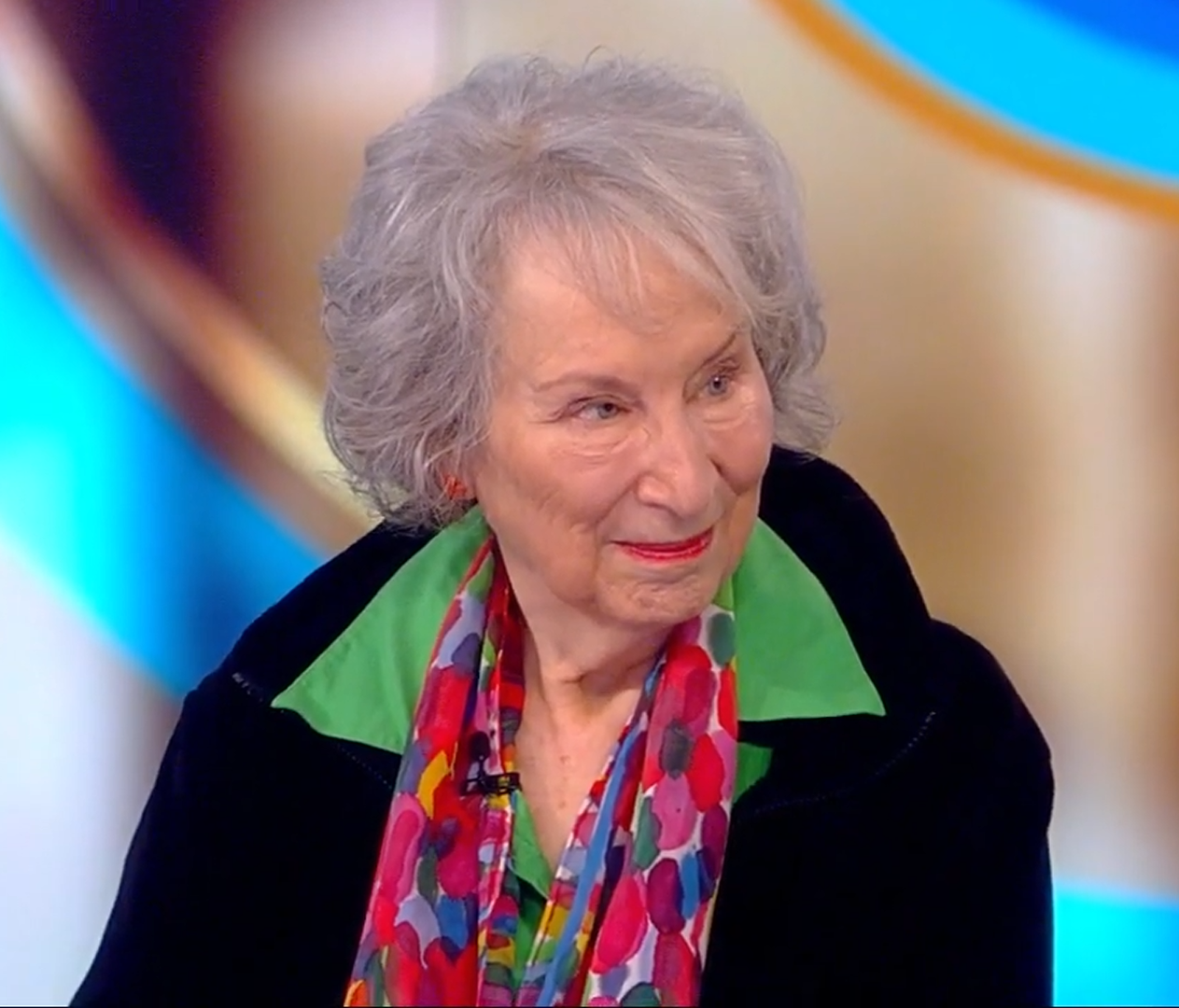
Margaret Atwood Opens Her Life, Loss, and Literary Legacy in Book of Lives”
Margaret Atwood’s Book of Lives: A Memoir of Sorts is not just a recounting of events; it is a meditation on memory, creativity, and the unpredictable twists of a life lived in literature. When the acclaimed author sat down with the Associated Press ahead of its publication, she offered readers insight not only into the book itself.
Margaret Atwood

But into the mindset that made such a personal project possible. Atwood, at age 85, is a figure long associated with dystopian prophecy and feminism. She described this work as something she finally embraced after years of resisting the very idea of a memoir.
In her words, this book is about “what you remember.
Rather than a biography, which is a lot of things you don’t remember or would rather not remember.”

Book of Lives spans roughly 600 pages, charting Atwood’s journey from a childhood in Canada’s wilderness to a lifetime of literary and cultural achievement. The memoir’s title reflects its structure: a tapestry of lives lived within one lifetime.
The personal is woven together with the creative. Atwood makes clear that this is not a dry chronicle. But it embraces both “good fortune” and the raw material of hard experience. She acknowledges vividly that the book includes moments of “frustration, grief and betrayal.” Yet also celebrates the joys that have shaped her work and world.

Margaret Atwood Discusses Handmaid’s Tale
In discussing her literary career, Atwood shared how even her most famous works emerged from seemingly small or unconventional inspirations. She recalled that The Handmaid’s Tale, now a cultural phenomenon, began with what she once thought was too “weird” a notion.
“What if the United States became a totalitarian theocracy?” Similarly, Alias Grace stemmed from historical murders, and The Robber Bride was inspired by a Brothers Grimm tale. These admissions underline the memoir’s broader theme: that writing, like life itself, is an alchemy of chance, curiosity, and persistence.
But Atwood’s reflection is not limited to her craft. In the AP interview, she spoke candidly about her sense of luck and perspective. When asked if she felt she had lived a good life? She responded with characteristic pragmatism and humor: on the whole, “yes,” noting that she was part of “a quite lucky generation”!

A life Well Lived
And had avoided the worst violence and destruction many around the world have endured. She also touched on the relative stability of her upbringing.
How it informed her interest in the darker themes that populate her fiction. It was the larger world’s turmoil, not direct personal experience, that drew her into imagining dystopias.
A poignant strand of Book of Lives concerns mortality, loss, and love. Atwood admitted that she would not have written the memoir if her longtime partner, Graeme Gibson, were still alive.
She found joy in recounting their years together, stating, “I quite enjoyed writing those parts,” but confessed that writing about his death “wasn’t fun. But it’s real life. And in real life, people die.”
The Testament
In Book of Lives, the memoir becomes both mirror and map: a record of what Atwood has seen, felt, and imagined, and a testament to a life shaped by the story itself. It invites readers into the intimate corridors of memory, illuminated by an author who continues to think deeply about the intertwining of life and art.
Photo Credits: AP and YouTube